
PACSS: Common Goals, Unique Responses
Of the many reasons individuals with a substance use disorder (SUD) do not receive treatment, “not knowing how or where to get treatment” is more easily addressed than others. Nationwide, substantially fewer people cited this as a reason for not receiving treatment in 2024 than in 2022. Subrecipients of Public Awareness Campaigns on Substance Use and Supports (PACSS) funding are committed to dropping that number even further.
PACSS was designed to fulfill the public education requirement of the Cannabis Regulation and Tax Act (Public Act 101-0027), which legalized the purchase, possession, and use of cannabis in Illinois. Since fall 2024, the four PACSS subrecipients have increased awareness and understanding of substance use and its health effects, as well as the availability of support services for individuals at risk of or misusing substances.
Getting the Word Out
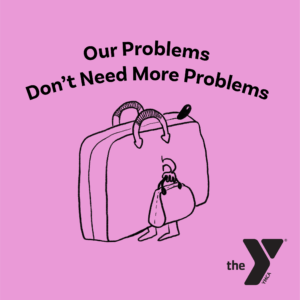
In alignment with funding requirements, subrecipients are sharing information in places where their intended audiences are likely to see it. Recognizing the prevalence—and power—of social media, the Young Men’s Christian Association (YMCA) of Chicago launched a comprehensive digital media campaign, which has received more than 27 million impressions. Distribution of informational materials at more than 200 sites and events provides a more personal touch to the YMCA’s campaign.
The Family Service and Mental Health Center of Cicero (FSMHCC) also reached out directly, by connecting with leadership at community organizations and expanding how widely they shared printed materials. Community surveys and bilingual focus groups identified parent concerns and terminology preferences. This insight helped shape neutral, factual messaging that reduced misinterpretation and led to the campaign name “Marihuana Sin Rodeos/Marijuana for Real,” chosen for its clarity and informative tone.
FSMHCC staff recognizes the importance of positive community relationships and has built a vetted list of more than 100 journalists to support future campaigns. “We’re positioning ourselves as subject-matter experts,” shares FSMHCC staff, “by sharing data-backed points, citing trusted sources, and building relationships with priority journalists to secure expert coverage.”

Engaging Youth
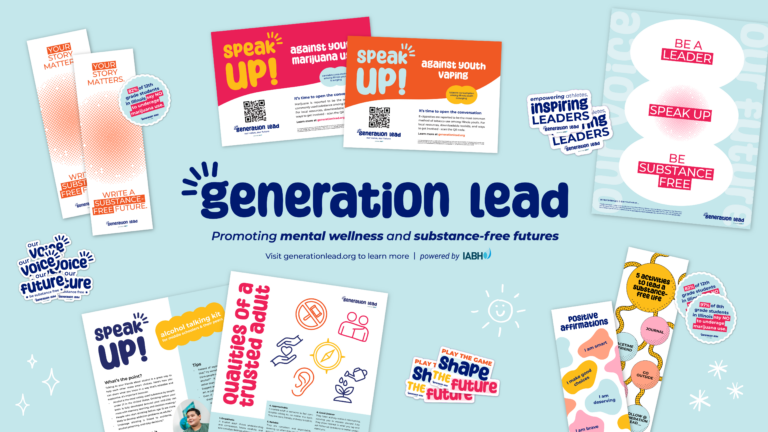
For many youth, peers are trusted sources. To that end, the Illinois Association for Behavioral Health (IABH) established Generation Lead, a statewide youth education campaign featuring teen leaders.
In summer 2025, Generation Lead contributed to the Cebrin Goodman Teen Institute, which is a youth leadership and prevention program for middle school and high school students. In addition to holding several workshops throughout the weeklong event, Generation Lead staff exhibited at the conference resource fair, spoke at the adult mentor meeting, distributed campaign t-shirts on the Generation Lead–sponsored day, and spoke to all attendees prior to the keynote speech. This activity resulted in multiple benefits, such as
- Growing campaign awareness with action teams throughout the state;
- Inspiring more youth to inquire about becoming Gen Leaders; and
- Facilitating opportunities to exhibit at parent–teacher conferences and freshman orientation, as well as to help youth hang up campaign materials throughout their schools.
Giving Back
The Chicago Recovering Communities Coalition (CRCC) also leverages the value of peer support. In this case, the youth have come full circle, first receiving and then providing support.
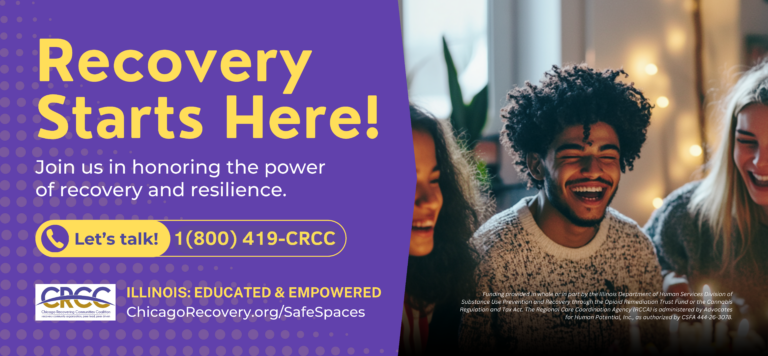
As one of its strategies, CRCC’s Illinois: Educated & Empowered Campaign placed billboards aimed at normalizing recovery and reducing stigma throughout Illinois. The family of a high school athlete who was struggling with peer pressure and experimenting with various substances reached out for support after seeing a PACSS billboard in their neighborhood. Through this connection, the youth received mentorship and education on risk reduction and recovery support, gaining valuable insight into how to make healthier choices. Today, he remains connected to a mentor and volunteers with CRCC.
Another young person was connected with a recovery coach, mental health services, and supportive mentorship through CRCC’s centralized database that tracks requests and partner engagement across all five Illinois Department of Human Services regions. At first, the young person was hesitant, but over time he embraced the support. Today, he serves as an Emerging Adult Ambassador for CRCC, using his experience to help other young people understand the importance of mental health and self-care.
“These successes are reminders of how outreach and visibility can open doors for young people to discover purpose, accountability, and community support,” notes CRCC staff.
Looking Ahead
Much has been accomplished since the launch of PACSS, and the subrecipients are eager to build on their momentum. “One of the most rewarding aspects of my role,” states PACSS Program Manager Cameron Sweatman, “is witnessing our PACSS subrecipients’ authentic dedication to their populations of focus. I see this in how they push, even after success, to continuously improve strategies.”
PACSS subrecipients share a goal of expanding their respective campaigns; they use a variety of approaches, including the following:
- Developing campaign materials in other languages.
- Exploring novel ways to distribute materials, such as streaming platforms and large screens in school cafeterias.
- Forming new partnerships, particularly in areas of the state not currently served.
- Deepening integration with community and cultural events (see figure 1) to keep messaging relevant throughout the year.
- Coordinating regional storytelling, data collection, and community collaboration.
- Producing a statewide evaluation summary highlighting reach, impact, and community voice to inform future planning and sustainability.
- Expanding a resource library based on current events, trends, and beneficial topics for the community.
The diverse nature of these activities is not surprising, despite the common goals of PACSS subrecipients to reduce, prevent, or delay use or misuse of substances; minimize stigma associated with SUD, treatment, and recovery; and reduce harms associated with substance use and misuse. As perhaps best explained by IABH staff, “We have learned how to be flexible and really listen to the needs of different communities.”